
Loading...
Loading...
Agey George
Every year, Parag releases a list of outstanding Indian children’s books curated by a panel of sector experts in Hindi and English under the Parag Honour List, which libraries, teachers, and parents often refer to while selecting and procuring books for children.
The Parag Children’s Choice Award (PCCA) emerged as an attempt to extend this initiative by bringing children into this conversation and creating an environment that encourages them to engage with diverse high-quality children’s literature and express their appreciation for books that strike a chord.
Most literary recognitions evaluate, celebrate, and award books based on metrics mapped out from a grown-up’s idea of a great book. Amidst such (much-needed) literary criticisms of children’s books, PCCA has a different objective. PCCA strives to be a platform where children come across good Indian children’s literature, read it and form opinions about these books as they gradually arrive at the decision to vote for their favourite title. Here the journey of children thinking about why and how much they like or do not like a book becomes as important, if not more important, than the award itself.
Following the initial ideation, we had to compile a longlist for PCCA while ensuring that these were—upon careful examination by an experienced jury—some of the most exceptional books for children, published in India during the recent years. After extensive rounds of discussion, it was decided that books from the Early Reader and Young Reader (7+) age categories of previous year’s Parag Honour List would form the longlist for the upcoming year of the Parag Children’s Choice Award.
As soon as the PCCA 2025 longlist was in place and the award was officially launched, registrations poured in from across India. Mirroring our excitement, the libraries eagerly awaited the physical copies of the longlist. The PCCA team was able to extend support wherever necessary in the procurement process.
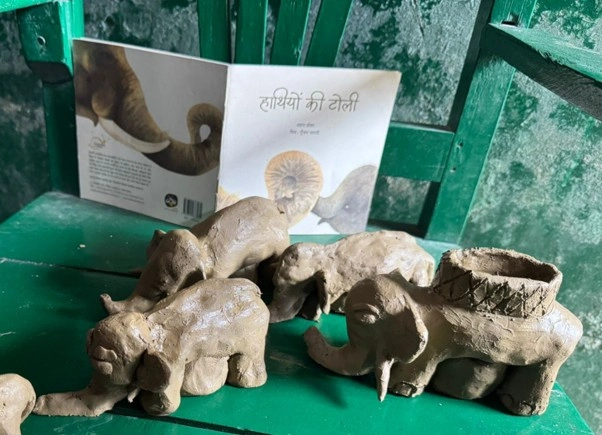
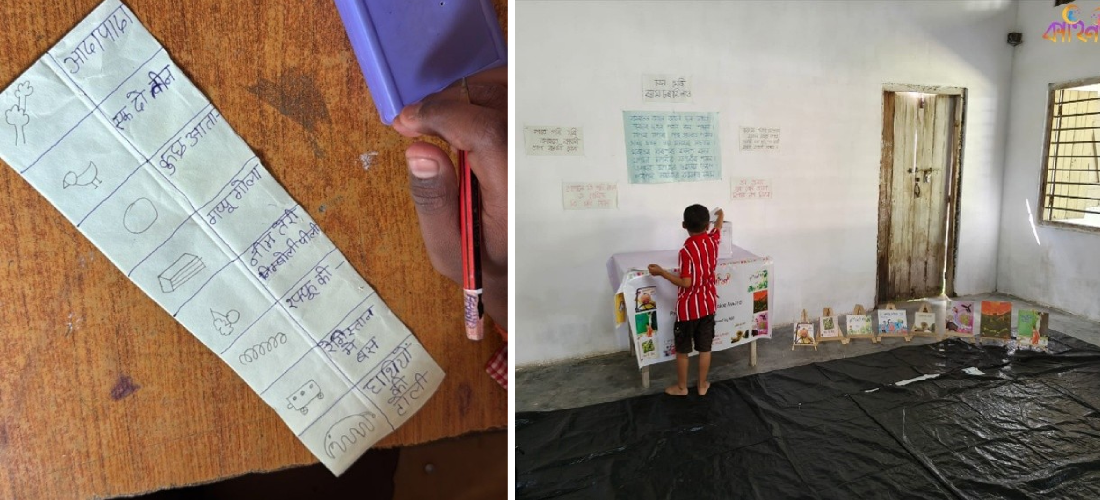
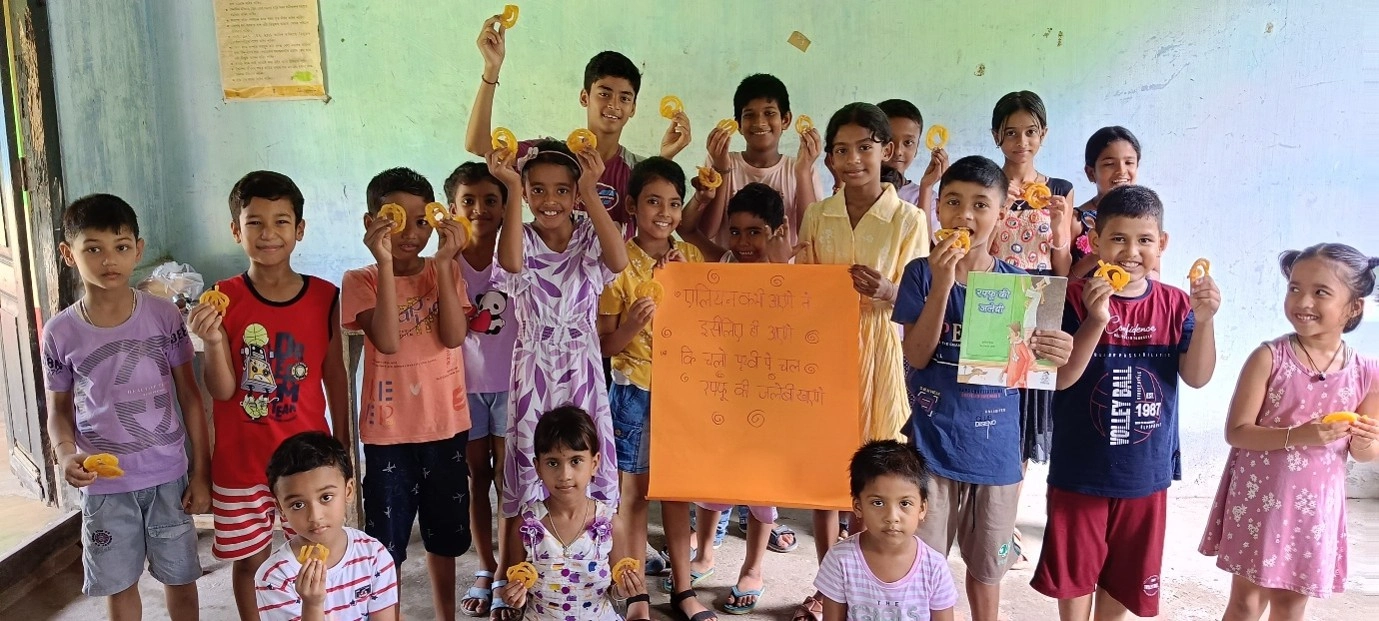
Once the books made it to the library shelves, came the most crucial part of the PCCA journey—engaging children with all eight longlisted titles. Librarians and facilitators played an indispensable role at this point as libraries came up with numerous creative ways to make this happen. These included recitations and read-alouds, artwork and theatrical activities, and shared, paired, and group reading sessions where children became active participants. They explored themes, characters, rhymes, and rhythm along with the illustrations and text in the books. From learning more about neem trees while sitting under their shade and making elephant figurines with clay to drawing posters and even eating jalebis—every activity became a step forward that drew children deeper into the world of stories.
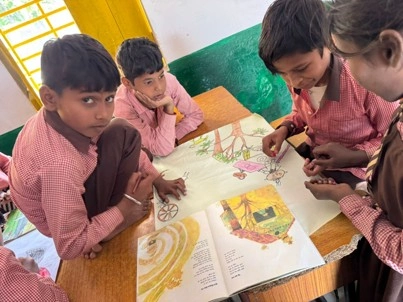
As children spent more time reading these titles, they also shared their thoughts and opinions about the books. When one mumbled about how farts made them giggle, someone declared their love for hot jalebis, and another recalled the medicinal properties of neem leaves, once used in their own home; quiet evidently, they were all experiencing the joy of reading.
The PCCA team had the opportunity to visit some of the participating libraries situated in the Delhi-NCR region.
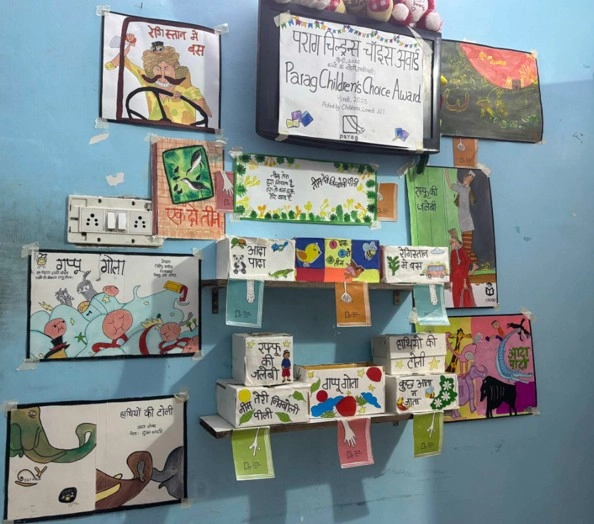
One such library was the Jyot Foundation Community Library run by Manjeet Kaur. Manjeet also runs a branch of this library in Punjab. In Delhi, she runs the library from a room in her own home. Within that small space, Manjeet and her daughter had fostered a lovely PCCA set-up. Its green walls were decked up with hand-drawn and coloured covers of the longlisted books along with their respective ballot boxes.
Manjeet told us about children from the nearby neighbourhoods who came in to read books and participate in activities such as independent and group reading sessions, art and craft, and book talks. It was incredibly inspiring to see her sincere commitment towards the library and the children.
Another moving experience was our visit to the playroom and library run by Archana Atri, named Adi’s Corner, in the cancer ward for children at the Post Graduate Institute of Child Health, Noida. Lively, colourful, and full of books, the room itself stood apart from the rest of the hospital and created an atmosphere that uplifted one’s mood. Archana’s endeavour to create this reading corner has proved to be deeply therapeutic for both the children and their families. Doctors and hospital staff echoed similar sentiments as they spoke about the need for such a space. Archana told us how several children’s book authors and illustrators regularly visited Adi’s Corner to spend time with the children through reading and drawing sessions. She mentioned how children could come and go according to their treatment schedules, but the room would quickly fill up whenever book reading sessions took place.
During our visit, we saw a child drag their IV drip into the room just to join an ongoing reading session with Archana, whom the children fondly called Kahaaniwali Nani. As Archana read lines from Gappu Gola, children laughed and completed the lines with her. Later, a girl eagerly walked up to Archana, offering to read her favourite book out of the lot, Registan Mein Bus. Her father was also in the crowd, encouraging the little girl. These moments reflected the significant role that books and shared reading experiences can play for children in distress.
The Mehrauli Community Library was yet another library we visited in Delhi. Situated beside the ruins of Jahaz Mahal and Shamshi Talaab, this beautifully set-up library is a ray of hope for all the children that it hosts. Children of different age groups come here to sit and read from a wide variety of books neatly arranged in the shelves that line the walls. They also find support to complete their school homework and get access to the internet for studies here.
Founded and run by Orlanda Ruthven with the help of many dedicated volunteers, including students, this library had its own way of approaching PCCA. We saw younger children sprawled across the chairs, listening intently with their books and ears open as older ones and volunteers helped them read and understand the PCCA longlist.
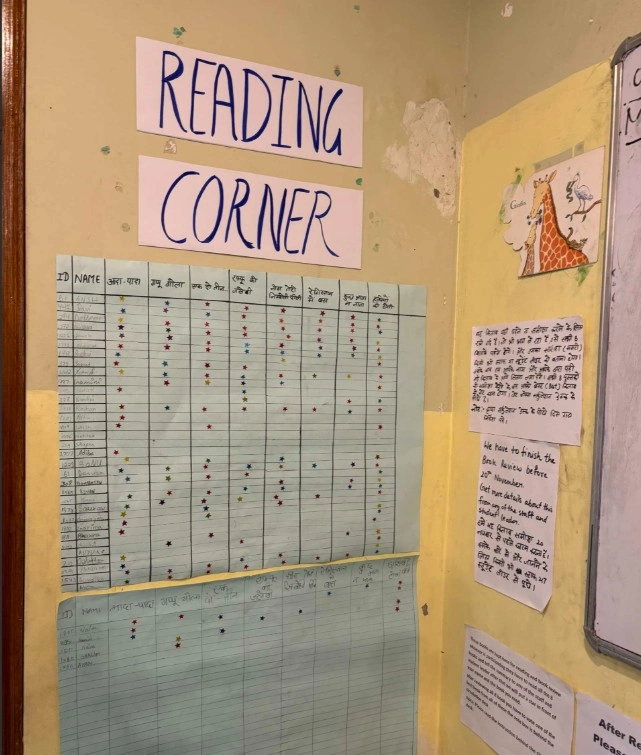
Last on our list was a school’s library run by Chitra Singh, who registered two of her classes for PCCA. Our visit coincided with their voting day, which turned out to be an eventful experience overall. Children cast their votes and spoke to us about their favourite book; some also told us why they didn’t enjoy a particular book. When we asked a student why Haathiyon ki Toli was his favourite, it felt almost poetic that the boy simply responded by reciting a verse from memory— “हाथियों की टोली में / जो बूढ़ा हाथी होता है / सबसे पीछे चलता है / और गहरी यादें ढोता है”.
Whatever the reasons may be, feelings ran deep. The enthusiastic yays and the nays of the children echoed in the school’s corridors as the final vote-counting exercise took place. And with this, our library visits came to a close.
Soon the libraries submitted their voting details and experiences, and we started collating the data.
The scale of participation across India was heartening. From the 160 libraries that had initially registered for the initiative, 113 libraries completed the entire process—from the procurement of books to the submission of voting details and the visual documentation.
The award was announced during the Parag Utsav (December 2025) held in Delhi, where children from nearby community libraries such as Jyot Foundation Community Library and Mehrauli Community Library were present to announce and hand over the award to the author, illustrator, and publisher of the winning book. While facilitators Kuldeep Das and Chitra Singh shared their journeys through video notes, Jasleen from Jyot Foundation Community Library shared her experience on stage as a child who participated in PCCA. The event also included a medley of children’s poetry sung by poet-singer duo Chinmayi Tripathi and Joell Mukherjii. This was followed by an informal interaction between the children and the authors and illustrators who attended the award ceremony. The Parag Utsav officially marked the end of PCCA’s first year.
PCCA 2025 became much more than a voting exercise or an award process. It created spaces where children could immerse themselves in books, share their opinions and experience the pleasures of reading. The process also highlighted the crucial role played by librarians, teachers, and community spaces in shaping children’s reading journeys.
A notable learning from this process was the role librarians played as facilitators of reading experiences. Their creativity, commitment, and understanding of their communities shaped how children interacted with the books. Their involvement in various ways helped us reinforce the idea that voting was never the sole purpose of the process. The core intention remained to engage children with high-quality books and create meaningful reading experiences around them. The award emerged only as one part of this larger engagement.
Visual documentation also played an important role in helping us understand how the process unfolded across the diverse contexts of more than 100 libraries in India.
Out of 7,000+ children who voted, less than a quarter voted for Aada Pada, which eventually emerged as the winning title. At the same time, libraries shared varied responses regarding the different books children connected with and liked. For instance, Blue Ladder Trust shared a video reflecting on how the PCCA longlist opened up children’s interest in poetry. Several children across libraries preferred titles such as Haathiyon ki Toli, Raffu ki Jalebi, and Gappu Gola over Aada Pada.
Interestingly, Aada Pada itself came as a surprise because we had initially assumed that librarians might hesitate to engage children with a book centred around embracing the usually embarrassing subject of farts. But children responded to the humour and playfulness of the book in unexpected ways. It was clear: children couldn’t be bothered to discriminate between nonsense verse and verses that bestowed wisdom like grown-ups do. They just like what they like, with utmost sincerity.
Significant insights also emerged around many other aspects since we wrapped up PCCA last year. Such feedback has been particularly valuable and will help shape decisions regarding longlist selection and timelines for PCCA 2026. More than identifying a single winning title, PCCA helped create conversations around books and reading that felt participatory, reflective, and deeply rooted in children’s experiences. Most importantly, these experiences and learnings continue to urge us to create child-centred reading initiatives that value children’s responses, interpretations, and preferences.

‘बस्ते में सवाल’ एक नये ढंग की कहानी है जो शुरू तो होती है बच्चों के बस्ता झाड़ने के एक दैनंदिन अनुभव से, लेकिन अंत होते-होते वृहत्तर सामाजिक-राजनैतिक परिप्रेक्ष्य से जुड़ती है, और…

बच्चों के लिए रचित कविताओं की दुनिया कितनी बदल चुकी है, इसका अंदाज़ वरुण ग्रोवर की यह छोटी सी किताब सहज ही दे देती है। बिल्ली-चूहे या बने बनाए छंदों में उपदेश परोसने वाली…

